
Sustainability Trends in Plastics and Functional Masterbatch Development
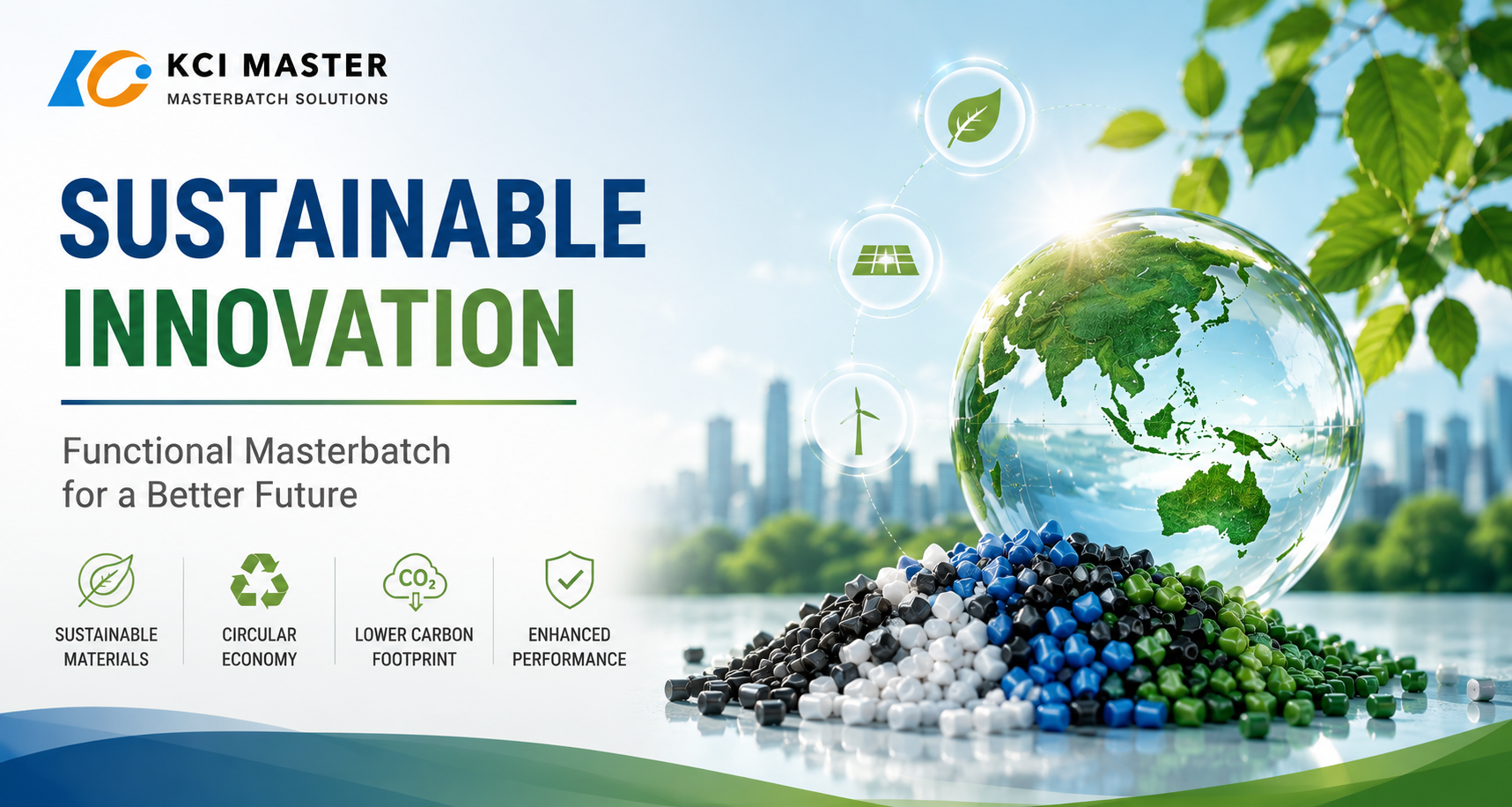
Sustainability Trends in Plastics and Functional Masterbatch Development
How Polymer Materials Drive a More Sustainable Future Through Functional Innovation
In recent years, global demand for sustainability has continued to grow. Brand owners, manufacturers, and end consumers are paying closer attention to the environmental impact of products, and the plastics industry is undergoing a major transformation.
In the past, the market mainly focused on cost, production efficiency, and product performance. Today, additional requirements have become increasingly important, including carbon management, recycling, energy efficiency, and ESG development.
Under this trend, functional masterbatch is becoming an important tool for upgrading plastic materials and creating higher-value applications.
Why the Plastics Industry Is Moving Toward Sustainability
Many countries are promoting carbon neutrality policies, circular economy regulations, plastic recycling systems, and ESG supply chain management. International brands are also asking suppliers to provide PCR content, carbon footprint data, recycled material certificates, and sustainability reports.
This means future competition will no longer be based only on price. It will also depend on material value, performance, and sustainability.
Functional Masterbatch Is Changing the Role of Plastic Materials
Traditional color masterbatch mainly provides color. However, the new generation of functional masterbatch can integrate additional performance, such as thermal management, UV resistance, anti-static properties, antibacterial performance, flame retardancy, conductivity, and recycling stabilization.
Plastic materials are gradually evolving from basic structural materials into functional materials, helping products achieve a better balance between performance, sustainability, and market differentiation.
Trend 1: The Growing Use of PCR Materials
PCR, or Post-Consumer Recycled Material, refers to materials recovered after consumer use, such as recycled bottles, packaging, and household appliance shells. After processing, these materials can be used again in manufacturing, reducing dependence on virgin plastics.
Challenges of PCR Materials
Due to different sources, PCR materials often face color inconsistency, odor issues, flow variation, and mechanical property fluctuation. Therefore, many companies use color masterbatch, stabilizing masterbatch, and functional additives to improve PCR material quality.
Trend 2: Biochar Masterbatch
Biochar is produced from biomass waste, such as agricultural residues, wood by-products, and energy crops, through low-oxygen pyrolysis.
Advantages of Biochar
Carbon storage: Biochar can help lock carbon into materials for a longer period, supporting lower-carbon product design.
Reduced dependence on petrochemical materials: Biochar may partially replace conventional carbon black in selected applications, offering a new direction for low-carbon material development.
Enhanced ESG value: It supports sustainable branding and responds to market demand for lower-carbon materials.
Applications of Biochar Masterbatch
- Outdoor furniture
- Luggage
- Automotive parts
- Building materials
- Industrial products
Trend 3: Increasing Demand for Thermal Management Materials
As extreme weather becomes more common, demand for thermal management in products continues to rise. Plastics are no longer only molding materials; through functional design, they can help reduce heat buildup, improve comfort, and support energy efficiency.
Cloud Masterbatch
Cloud Masterbatch is designed to help reflect part of solar heat, reduce heat accumulation, improve comfort, and enhance energy efficiency. It enables plastic materials to provide thermal management performance in different applications.
Typical Applications
- Building materials
- Automotive parts
- Outdoor furniture
- Consumer products
- Cold chain packaging
Trend 4: Multi-Functional Integrated Design
Future product design increasingly aims to solve multiple problems at the same time. As a result, functional masterbatch is moving toward integrated solutions.
For example, one formulation may combine color, UV resistance, anti-static performance, antibacterial properties, thermal management, and sustainable material features. This helps reduce design complexity while increasing product value.
Trend 5: Durability as a Sustainability Strategy
Sustainability is not only about increasing recycled content. Another important strategy is extending product service life. When products last longer, replacement frequency decreases, helping reduce material consumption and overall carbon impact.
UV Resistant Masterbatch
Ultraviolet radiation is one of the main causes of plastic aging. Long-term exposure may lead to brittleness, discoloration, cracking, and strength loss.
UV resistant masterbatch can improve weather resistance in plastic products. Actual service life should still be evaluated based on product design, resin type, and environmental conditions.
Marine and Outdoor Applications
Products used in marine and coastal environments must handle not only weather exposure, but also humidity, salt, and strong UV radiation.
Common applications include marine floats, aquaculture equipment, offshore facility components, outdoor products, and coastal engineering materials.
Trend 6: Improving Recycled Material Utilization
Increasing PCR content is an important goal of the circular economy. However, recycled plastics often face unstable melt flow, processing difficulty, poor dispersion, and quality variation. These issues can limit the actual use rate of recycled materials.
Recycling Processing Aid Masterbatch
Through functional formulation design, recycling processing aid masterbatch can help improve processing stability in recycled materials. Potential benefits include better processing efficiency, improved flow, reduced production variation, higher recycled content, and more consistent product quality.
Why It Matters
The biggest challenge in the circular economy is often not recycling itself, but whether recycled materials can be used consistently after recycling. Recycling processing aid masterbatch helps manufacturers use PCR materials more effectively and increase their practical application rate.
The Business Value of Functional Masterbatch
Greater Product Differentiation
Functional masterbatch gives products special performance and helps companies avoid competing only on price.
Higher Product Value
When materials provide thermal management, weather resistance, anti-static performance, or low-carbon value, the material itself becomes part of the product’s selling point.
Support for ESG Goals
Functional masterbatch helps companies respond to international market expectations for energy saving, carbon reduction, and circular economy development.
Stronger Brand Competitiveness
Through sustainable materials and functional innovation, companies can improve brand image and market positioning.
Future Market Development
The future development of functional masterbatch will focus on circular economy, low-carbon materials, energy efficiency, smart functions, and customized applications.
- Circular economy: Increasing recycled material utilization.
- Low-carbon materials: Reducing product carbon footprint.
- Energy efficiency: Improving insulation and thermal management performance.
- Smart functions: Combining sensing and specialty materials.
- Customized applications: Developing tailored formulations for different industries.
KCI Functional Masterbatch Solutions
KCI Master provides a wide range of functional masterbatch solutions to help customers balance performance, sustainability, and market competitiveness.
- Color Masterbatch
- Black Masterbatch
- White Masterbatch
- Biochar Masterbatch
- Cloud Masterbatch
- Anti-Static Masterbatch
- UV Resistant Masterbatch
- Recycling Processing Aid Masterbatch
- Customized Functional Masterbatch
FAQ
Does functional masterbatch increase cost?
It may increase material cost in some applications, but it can also improve product value, performance, and market competitiveness.
Do PCR materials always need functional masterbatch?
Not always. However, functional masterbatch can often help improve color, processing stability, and quality consistency in PCR materials.
Can biochar masterbatch fully replace carbon black?
In most applications, biochar is currently used as a partial replacement. The best solution depends on product appearance, performance, processing conditions, and application requirements.
What products are suitable for UV resistant masterbatch?
UV resistant masterbatch is commonly used in outdoor furniture, agricultural materials, building materials, automotive parts, and marine-related applications.
Can recycling processing aid masterbatch increase PCR content?
In many applications, it can improve processing stability and help increase PCR usage. Actual results depend on recycled material sources, formulation, and processing conditions.
Will the functional masterbatch market continue to grow?
Yes. As ESG and circular economy requirements increase, functional masterbatch will continue to play a larger role in sustainable plastic materials.
Conclusion
The plastics industry is moving from traditional manufacturing toward higher-value and more sustainable innovation. Future material competitiveness will no longer depend only on price and performance, but also on whether materials can help customers achieve energy saving, carbon reduction, longer product life, and circular economy goals.
Functional masterbatch is one of the key tools driving this transformation.
Related Articles
- What Is Masterbatch? Functions, Types, Benefits, and Applications
Learn the basic principles, production process, types, and industrial applications of masterbatch. - What Is Functional Masterbatch? Types, Applications, and Benefits
Explore how anti-static, UV resistant, flame retardant, antibacterial, and thermal management masterbatches add value to plastic products. - What Is Biochar Masterbatch? A Low-Carbon Material Option for Plastics
Understand how biochar masterbatch supports carbon storage and circular material concepts. - Cloud Masterbatch: How Thermal Management Materials Improve Energy Efficiency
Learn how thermal management masterbatch helps reduce heat buildup and supports building, automotive, and outdoor applications. - UV Resistant Masterbatch Guide: Improving Weather Resistance in Plastic Products
See how UV resistant masterbatch helps extend the service life of outdoor plastic products. - How Functional Masterbatch Helps Reduce Product Carbon Footprint
Learn how material efficiency, processing stability, and product durability support ESG and carbon reduction goals.
Looking for the Right Functional Masterbatch Solution?
Whether you are developing PCR materials, biochar materials, weather-resistant products, thermal management applications, or solutions that improve both performance and sustainability value, KCI Master can provide customized functional masterbatch solutions based on different resins, processes, and application needs.
Contact KCI Master to develop polymer materials that combine performance, sustainability, and market competitiveness.