
High Thermal Insulation EVA Foam Technology and Applications
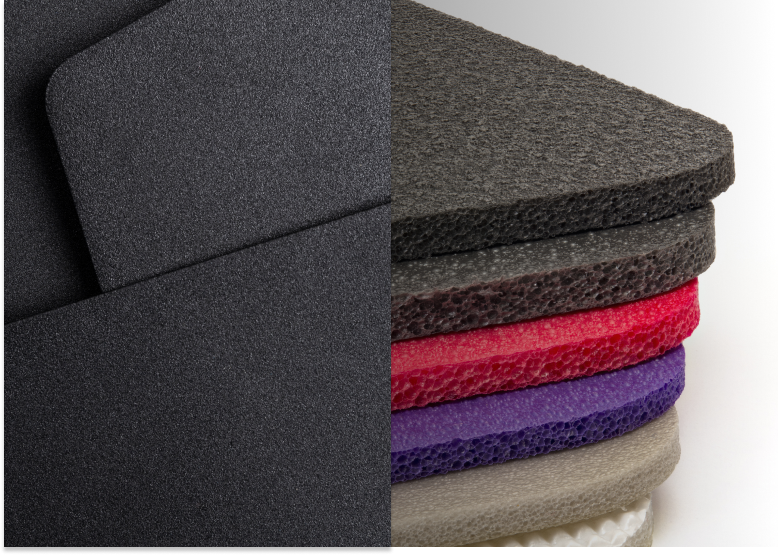
High Thermal Insulation EVA Foam Technology and Applications
1.Application of Low Thermal Conductivity Materials in Foam Materials
- Thermal insulation performance: Low thermal conductivity materials provide excellent insulation performance by effectively reducing heat transfer and slowing heat loss. When added to EVA foam materials, they can enhance the overall insulation performance and help maintain better temperature stability.
- Lightweight properties: Low thermal conductivity materials often feature low density and high porosity. When incorporated into EVA foam materials, they can help reduce the overall density, making the material lighter while maintaining functional performance.
2.Benefits of High Thermal Insulation Foam Materials
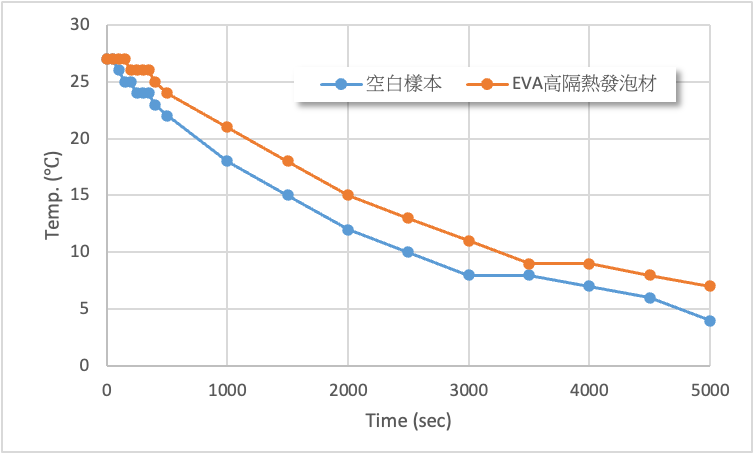
Through functional masterbatch composite processing technology, KCI successfully incorporates low thermal conductivity materials into EVA foam materials to improve thermal insulation and temperature retention performance. By comparing high thermal insulation EVA foam samples with control samples, the performance improvement of the material can be clearly evaluated.
- Heating Test:
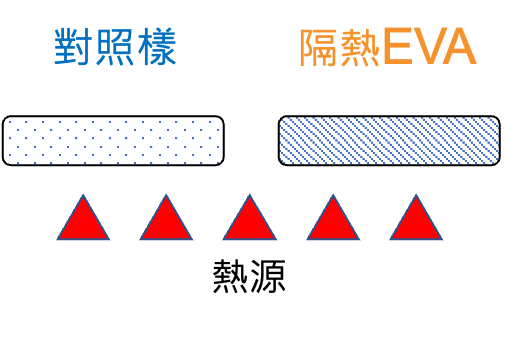
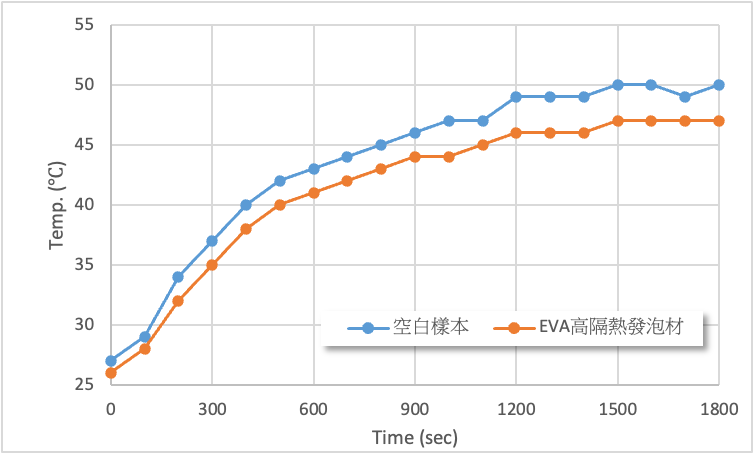
In the heating test, the high thermal insulation foam board and the control sample were placed on a 50°C constant-temperature heat source. The surface temperatures of both samples were measured simultaneously. Under the same heating duration, the high thermal insulation foam board containing low thermal conductivity material not only showed a slower temperature rise, but its final surface temperature was also 2–3°C lower than that of the control sample. This indicates that, under the same thickness, the insulation foam board can effectively reduce heat transfer.
▼ Test simulation: Sample thickness: 10 mm; heat source temperature: 50°C.
▲ Cooling Test
In the cooling test, the high thermal insulation foam board was made into a water container and placed together with the control sample in a -10°C constant-temperature environment. The water temperature inside both samples was measured. Under the same testing duration, the water inside the high thermal insulation foam board showed a slower temperature drop, and the final internal water temperature was 2–3°C higher than that of the control sample. This indicates that, under the same thickness, the high thermal insulation foam board can effectively reduce temperature transfer.
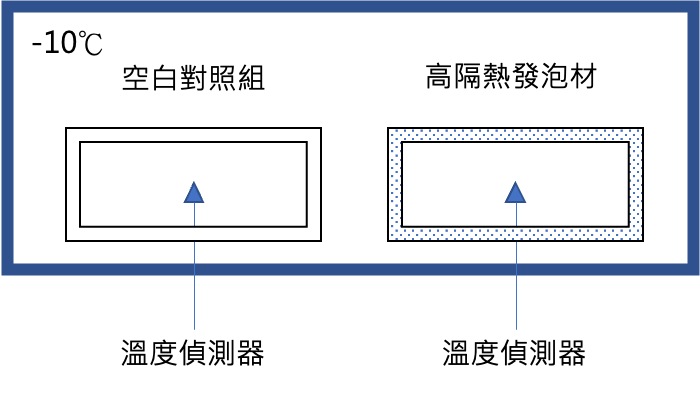
▼ Sample thickness: 10 mm; ambient temperature: -10°C.
3.Application Fields of High Thermal Insulation Foam Materials
High thermal insulation foam materials can mainly be applied in the following fields:
- Architecture and building materials: High thermal insulation EVA foam materials can be used in architecture and building material applications, such as insulation layers, thermal insulation boards, and roof underlayment materials. They can improve building energy efficiency and indoor comfort by reducing heat loss, lowering air-conditioning usage, and helping reduce carbon emissions caused by energy consumption.
- Automotive industry: High thermal insulation foam materials have potential applications in the automotive industry. They can be used for automotive sound insulation materials, thermal insulation pads, and shock-absorbing pads to reduce noise and vibration, improve driving comfort, maintain a comfortable cabin temperature, and reduce air-conditioning usage. For electric vehicles, this may help reduce power consumption and improve driving range.
- Freezing and refrigeration: High thermal insulation foam materials can be applied in freezing and refrigeration fields, such as insulation materials for refrigerated storage cabinets, refrigerated vehicles, and cold storage warehouses. They can reduce the required insulation thickness while maintaining stable temperature performance, helping reduce energy consumption and increase usable storage space.
- Packaging and logistics: High thermal insulation foam materials can be used in packaging and logistics applications. They are suitable for producing thermal insulation packaging materials to protect temperature-sensitive products such as food, pharmaceuticals, and cosmetics, ensuring stable temperature control during transportation.
- Sports and leisure: High thermal insulation foam materials can also be used in sports and leisure products, such as insulation mats, protective pads, and comfort cushions. They provide good thermal insulation and impact absorption performance, enhancing user comfort and safety.